Review: Good Boy
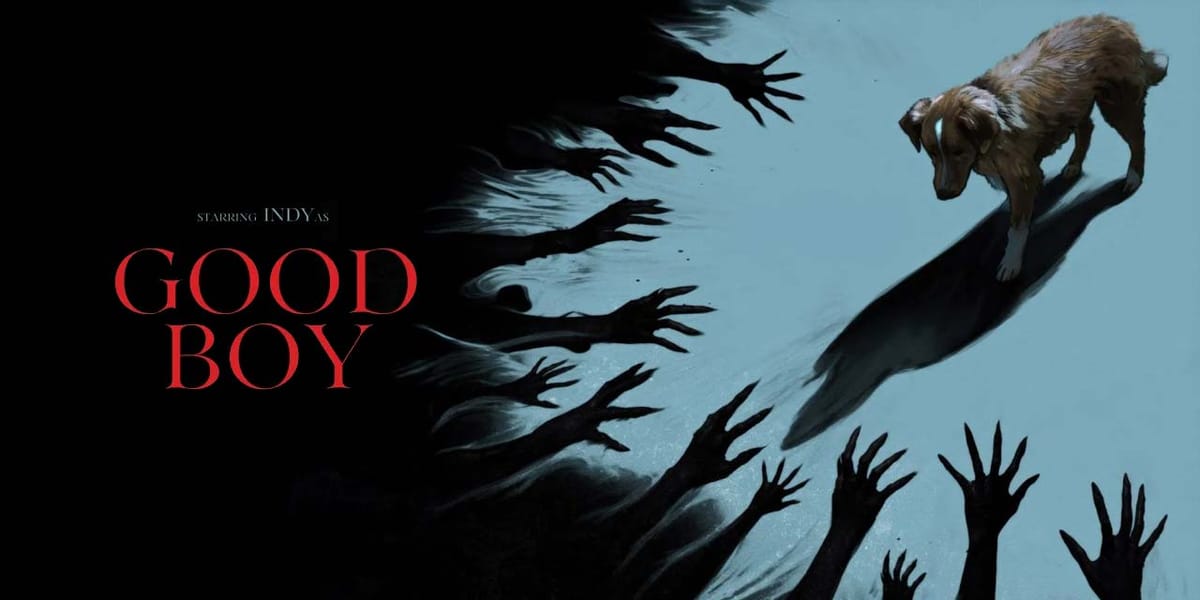
As soon as the official trailer for Good Boy dropped in August, it was reported that there was a 2,000% spike in the search “does the dog die in Good Boy.” If you didn’t search it you at least thought it and emotionally steeled yourself against the possibility. Killing a dog is an emotionally manipulative thing for a movie to do. The entirety of the John Wick franchise, all 5 movies, 3 episodes of miniseries, and the billion-plus dollars they collectively earned are based on a promise to the audience that they will see the death of a dog properly— that is, endlessly— avenged.
This impulse is both very noble and very sad. Maybe it’s just personal projection, but when a dog dies in a movie, especially a horror movie, I think the unpleasant emotion we're feeling is mostly shame. “The dog shouldn’t have been there,” we think. “If some caveman ancestor hadn’t thought that lost wolf puppy was cute a few dozen thousand years ago this wouldn’t have happened.” The death of a dog is a tragedy, yes, but we also understand it as a failure. The lives of humans are too messy, too haunted for a creature that so thanklessly and consistently keeps up their end of the deal. We fuck everything up. Dogs deserve better.
Like most of our noble and sad human impulses, this understanding of dogs is also fairly self-absorbed. There’s little room in our maudlin self-obsession to wonder what the dogs think of this arrangement. It’s a ripe area for visual storytelling, though most approaches show startlingly little faith in the “visual” part of this equation and choose to blare the dogs’ thoughts at you in human language with some kind of celebrity voiceover, insisting we need a translator to understand an animal we’ve been speaking with for millennia. Good Boy chooses not to infantilize us or our canine fellow travelers. Good Boy knows what movies are for.
Filmed over 400 days in his own house with his own dog, Good Boy is director Ben Leonberg’s first feature and a refreshing illustration of what’s possible when a film embraces inefficiency as a fertile area of creative possibility. The fact that Indy The Dog doesn’t know what movies are and isn’t really acting is an opportunity to construct a coherent story from nothing but the arrangement of images that constitute film as a medium: edits to imply Indy’s line of sight and point of view, shots that obscure the human faces to focus our attention on Indy’s fuzzy little head and soulful eyes.
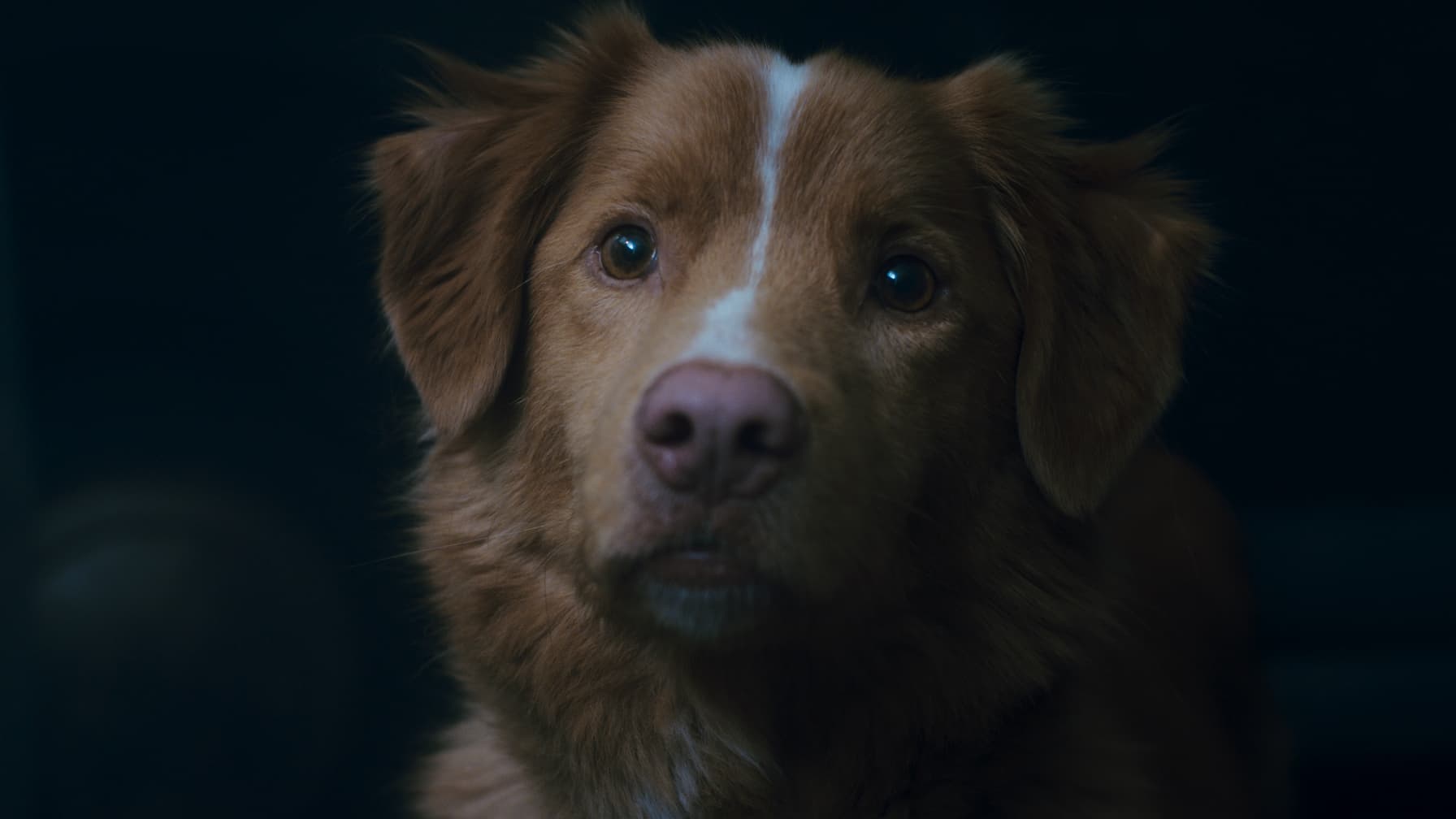
At the risk of speculating, I suspect the reason Good Boy has enjoyed so much grassroots support is because this combination—the human power of creative composition with the primacy given to the real, tactile presence of this one dog actor and his metatextual relationship with his owner-director—is the only way to achieve the kind of gentle idolization we think dogs deserve. In a lesser movie the dog is CG, or worse, AI. In this alternate universe tens of millions of dollars are spent on the CG dog and as a cornerstone of the marketing campaign the audience is invited to marvel at how realistic it looks.
Such behavior, as Good Boy and its tremendous success demonstrates, is a sin against both art and life. Movies, like all art, do not exist to capture reality and bring it to heel, they exist to interpret reality and, in doing so, actively create it. If there’s any universal human trait, it's the power of interpretation. We are meaning-making machines, destined to conjure spirits out of whatever patterns we choose to notice or reject. The simultaneous blessing and curse of the human species is that we can’t stop asking why. We spend our lives in pursuit of a good personal narrative arc, and this pursuit is often the exact thing that dooms us instead to being a tragedy, or a joke. The ancient role of dogs in this situation is to guide us through those patches of life where meaning and its pursuit catapults us into chaos and grief. They can do this with steadfast confidence because as creatures unburdened with the pursuit of meaning, they are admirably incapable of forgetting who they are.
Leonberg explains after the (very brief) credits that Good Boy is based on the half-jokes we tell about our pets “seeing ghosts” when they stare into corners or bark at something that’s not there. What if the dog really is seeing ghosts? What kinds of ghosts might they see?
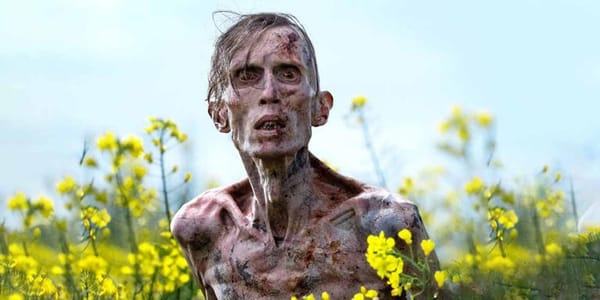
But what emerges out of this thought experiment is the uncomfortably enlightening possibility that what they see might not be that different from how they encounter the human world every day. Being wrapped up in the human pursuit of meaning-making, dogs are regular observers of all sorts of oddities. The neighbor Indy encounters, clad in bulky hunting camo and a Zodiac Killer-esque balaclava, is from his perspective no stranger or more normal than the mud-drenched phantom that shambles around the house at night. He doesn’t know what any of it means, but is equally brave in the face of both. The wildness of the fox he crosses paths with (Indy kind of looks like a fox, as the hunter neighbor points out) does not entice him. He is a dog. His job is to look out for his man, and he takes his job seriously.
Dogs, more than even other humans, witness us at our most unguarded. They watch us as we’re regularly attacked by spirits, forces they can’t see or hear or smell that make us scream aimlessly in empty rooms, dissolve into tears on the floor, harm ourselves. We alternately gloat and self-flagellate about the position of dogs in human lives, but I think even if dogs could understand this, they would be beyond comprehending why we, their charges, would ever consider it wrong to be loved. This is Good Boy’s ultimate artistic service: to interrupt the hatred we so often have for our own species with the unconditional concern and care dogs give us as a matter of course. The audience’s impulse is to worry about Indy, but Good Boy is really more the kind of horror a dog would make if dogs could make movies; a story about watching the amazing creature that anchors your world deteriorate for reasons you can’t understand and can’t save him from. Does the man make it in the end? Please tell me the man doesn’t die.