Top 5 Movies of 2024
In a media environment that favors budgets as inflated as scripts are thin, some movies still managed, against all odds, to be good.
I want to make it clear at the outset that overall, I thought movies sucked this year. Being a fundamentally grouchy person and slightly hostile student of American film industry machinations, I feel no obligation to pretend, as places like Rotten Tomatoes increasingly seem to, that the ability of a movie to get made must mean it meets a certain threshold of quality. Furiosa sucked. Gladiator 2 sucked. To know me is to know that Civil War sucked. Even Terrifier 3, which I was more excited about than maybe any other movie this year (and which, to be fair, was not bad), did less than its predecessor with 8 times the budget.
The American film industry has been living off its reputation for most of the last 20 years, and tech companies can’t resist the chum in the water. The more they swallow studios and treat film as a start-up bro roadside snake oil stand instead of an art, the more we’ll see scripts made by focus groups from spare parts and brought to unnatural, shambling life by hapless directors who are forced to shoulder all the blame for what is, at the end of the day, a money laundering operation.
Whatever. It's fine. As Captain America: Brave New World completes its 3rd round of reshoots and Netflix instructs screenwriters to have characters announce what they’re doing so viewers don’t have to pay attention for too long, the absence of America’s bloated cultural influence can and will be filled by others. This list, in that light, should probably be understood as a kind of postmortem. I am an American with, I think, very American tastes. I won’t argue that these movies are objectively the best of the year, and there are movies I know are good that I didn’t see (Sing Sing, Robot Dreams, Zone of Interest). These are just the ones I liked, with sincerity and refreshing abandon—the ones that didn’t leave me desperately thinking “well, I guess that one shot was kind of cool…”
First, the Honorable Mentions, movies I loved but that don’t define the cultural year for me:
The Apprentice
Anora
The Substance
Didi
Twisters
Heretic
Late Night with the Devil
5. Nosferatu
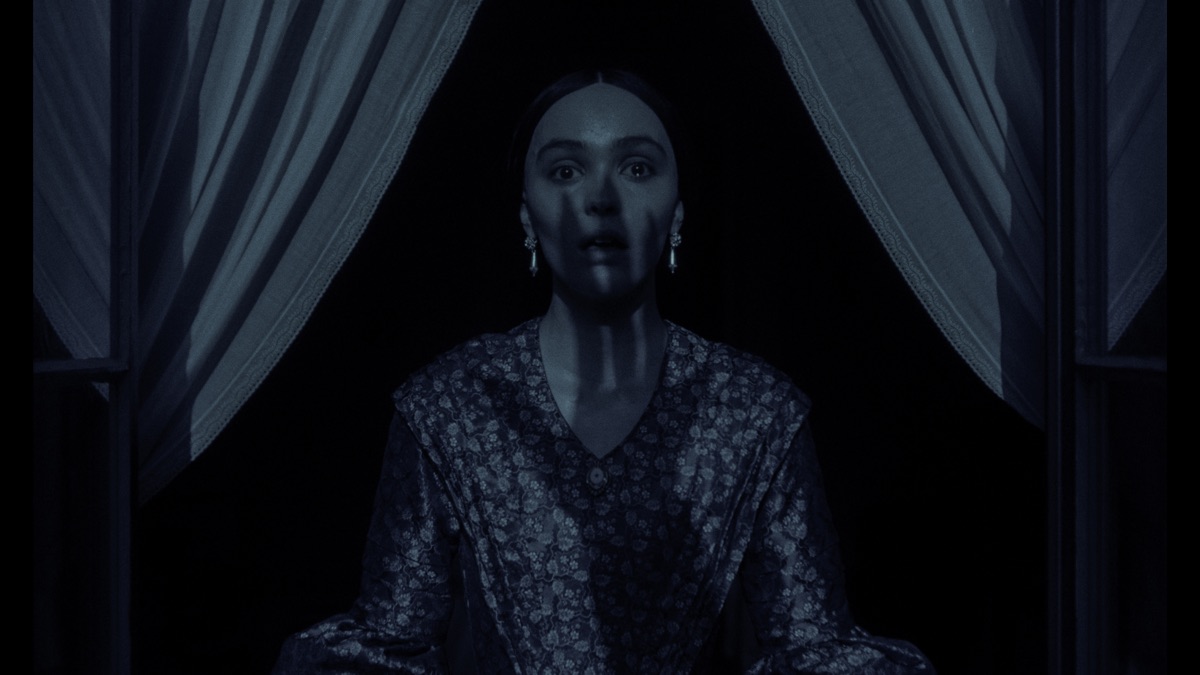
It’s the Christmas movie we deserve. 102 years after the original German Expressionist ripoff of Dracula established some of the most basic grammatical rules of film horror, Robert Eggers’ highly anticipated remake is pretty much what you expect, which is all it really needs to be. To remake a movie is to indict the present, even if its makers don’t recognize that’s what they’re doing. A Star is Born has been remade and successfully re-received every generation of the film era because every generation of the film era has sustained the same expectation of abuse and self-destruction as the one that came before.
To remake Nosferatu, then, requires a deep understanding of its historical place—in film, in culture, and in the necessary crossover between the two. It’s important that this is Nosferatu and not yet another Dracula. Nosferatu is famous because of its aesthetic, which takes the character Bela Lugosi somewhat self-importantly interpreted as suave and seductive and turns him into a frail, cringing, deeply weird-looking creature that’s recognizable as human only in the way a skeleton is recognizable as human.
Eggers’ version reintroduces this aesthetic to the 21st century along with, it has to be said, the rigidly gendered assumptions baked into its story. The success of a remake depends on whether its themes remain relevant, and Nosferatu’s, unfortunately, do. I think it’s pretty clear that Eggers is approaching this critically, but that doesn’t mean everyone in its audience will be prepared to understand this (David Erlich’s favorable review said it “draws a spellbinding power from the friction it finds between historical social mores and the eternal human thirsts they exist to keep in check." Wtf?)
Still, there’s no doubt that we’re replaying the same social anxieties that gripped the public in the late 19th century in ways that have just been repackaged, though we so often consider them antique. These anxieties are what Nosferatu feeds on, as a monster and as a film. Plagues are newly terrifying. Medical institutions are newly suspicious. Social status, superficial manners, and cultural mishandlings of sexuality are newly disrupting our capacity for intimacy, driving our need for connection into destructive and dangerous territories. Most importantly, wealth means something new, though we don’t yet seem to know what. Vampires in the post-war and neoliberal eras have centered around an assumed equivocation between the attractiveness and danger of opulent riches. Eggers’ Nosferatu brings the original vampire back and underscores its most provocative idea: that wealth and power are actually extractive and parasitic— simultaneously in unnatural stasis and active decay, and, more than anything, deeply unsexy.
4. Deadpool and Wolverine
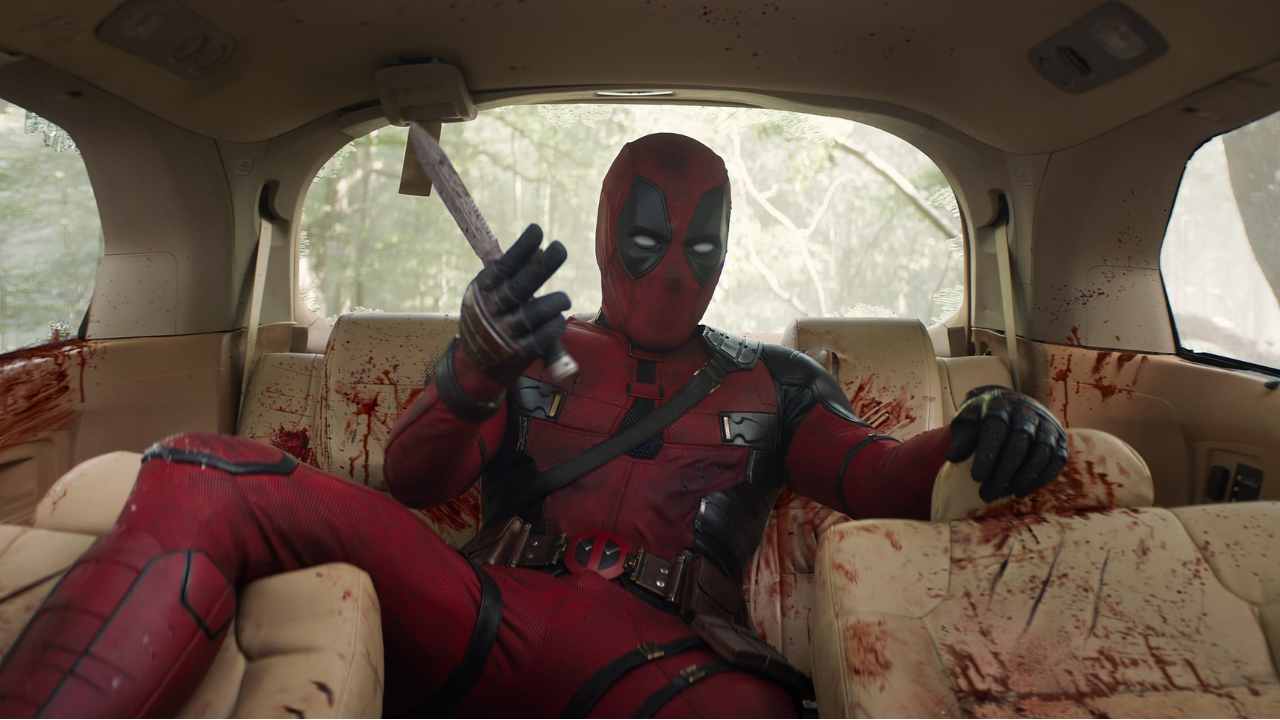
At the death of a genre what is there left to do except everything at once? Deadpool and Wolverine is the kind of movie that’s only made through sheer force of will. The combined forces of Marvel money and Ryan Reynolds’ earnest A-list influence make a lot of impossible things happen here, chief among them the promise of a bright future for Marvel that is troublingly now only deliverable through the deeply unserious figure of Deadpool. You could shoot through the corporate desperation with a gold-plated 50 cal. Desert Eagle, and Deadpool does, over and over again.
Still, parody is an art form and Deadpool and Wolverine is one of a kind in its ability to parodize with skill and sincerity. Deadpool is a trickster god, an archetype whose chaos makes it staggeringly difficult to turn into a main character (see how the Pirates of the Caribbean movies fell apart when Jack Sparrow became the main character, or how we learned this year that a Beetlejuice movie can’t actually just be about Beetlejuice). But by leaning deep into the suspension of disbelief demanded by superhero movies, Deadpool and Wolverine succeeds in making its heroes’ repetitious life-or-death stakes in their universes matter again (Wolverine being a sort of anti-trickster god, a guy who can’t escape his own fate rather than meddling in everyone else’s).
Part of Marvel’s problem is the perennial corporate failure to recognize that audiences change. The Gen Xers and Millennials who grew up with a certain kind of superhero are no longer children, and Marvel can’t continue to straddle two generations. Deadpool and Wolverine, like Logan before it, breaks the tie in favor of the former children who made the modern superhero movie successful rather than the current children whose only mainstream exposure to superheroes has been mediated through Disney. See what happens when we unshackle a movie from the need to promote brand integrity? Deadpool and Wolverine’s childishness only works because it’s paired with respect for Action as a genre—because it recognizes there’s a linguistic rhythm to profanity and an elegance to good fight choreography that evaporates when we have to avoid the R-rated fact that superheroes are supremely violent people. Only an approach to superheroes that acknowledges this can result in a narrative climax that employs a gospel chorus cover of Madonna’s “Like A Prayer” in a way that’s both hysterical and deeply heartfelt. Deadpool and Wolverine is ugly and gorgeous, cynical and honest, conventionally romantic and gleefully homoerotic, a mess of a narrative that only Deadpool could ever manage to conduct into harmony. Everybody pour one out for the last good superhero movie.
3. Wicked
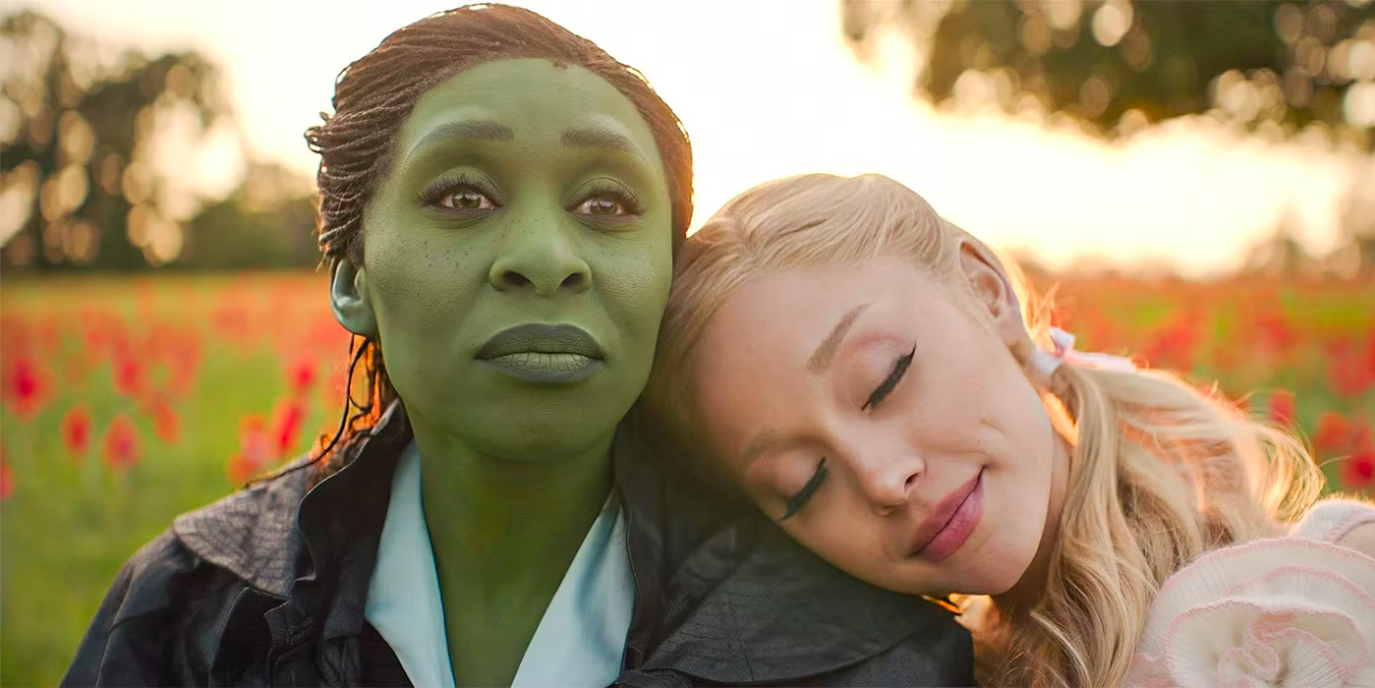
It occurred to me walking out of the theater that if the modern far-right actually cared in any real way about the American culture they’d “die to defend,” they’d be loudly singing the praises of Wicked (preferably in the form of a Lydian show tune). Only Ben Shapiro really tried, but even he couldn’t bear to just be happy about it. To enjoy what Wicked has to offer means being familiar with a lot of other cultural phenomena that are largely American in both origin and practice. The convergence of The Wizard of Oz as both a pop literary and film classic with musical theater, an extremely American art form, is inarguably part of what catapulted Wicked to its initial Broadway success.
The worst thing this movie could have done was try to be a “realistic” version of the musical, in the vein of Tom Hooper’s Les Miserables, as if the stylization and broadness of musicals is a primitive adjustment to the handicap of not having an actual chain gang labor yard to put onstage. The second worst thing Wicked could have done was be a carbon-copy of the musical and simply recreate everything it does from choreography to song arrangement. This was, by the way, Ben Shapiro’s complaint (I literally cannot imagine having the impulse to pull out a stopwatch and time the ‘Defying Gravity’ sequence in the theater).
This is not the stage; this is a movie adaptation. The charm of Wicked is in the way it’s in conversation with the musical, the way it doesn’t just slavishly recreate it for accuracy points and asks you to be familiar enough with the musical to notice the differences. I go to movies to receive an artist’s emotional experience, and at every moment this movie makes it clear that the goal of everyone involved was to make people who love this show feel the way they felt when they first saw it in middle school. Wicked knows exactly when film tools will benefit this project and when they won’t—when it’s time to show off a set piece and when it’s time to focus in on small emotions that get lost onstage.
This is a movie for theater nerds. And nerdiness, being a condition of necessarily embarrassing enthusiasm, has never been considered a marketable choice in film (despite nerds delivering Hollywood almost the entirety of its success for at least the past 3 decades). In an age of obsession with diffused risk and projected earnings in film it’s a minor miracle that an actual production team in 2024 realized that the point of adapting a show like Wicked should be to let a bunch of theater kids show everyone how much they love Wicked.
2. I Saw the TV Glow
It’s not lost on me that every entry in this list so far has either been a sequel or a remake. Sorry, that’s the state of things. The other day I was talking to a friend about Nosferatu and he said he sometimes wonders about the condition of a culture that can only seem to “reflect fears and problems shared with the past with the same texts of the past, making literal that the present is an echo of the past always instead of making new art of new fears.” I think it’s a fair observation. The dominance of film over all other art forms in the 20th century and the attachment of that art form to economic mechanisms has resulted in a kind of cultural Groundhog Day. As I think Nosferatu demonstrates, we may simply keep performing our problems over again until we learn whatever lesson is in store for us. I Saw the TV Glow is, I hope, evidence that our time to break the cycle might finally be near.
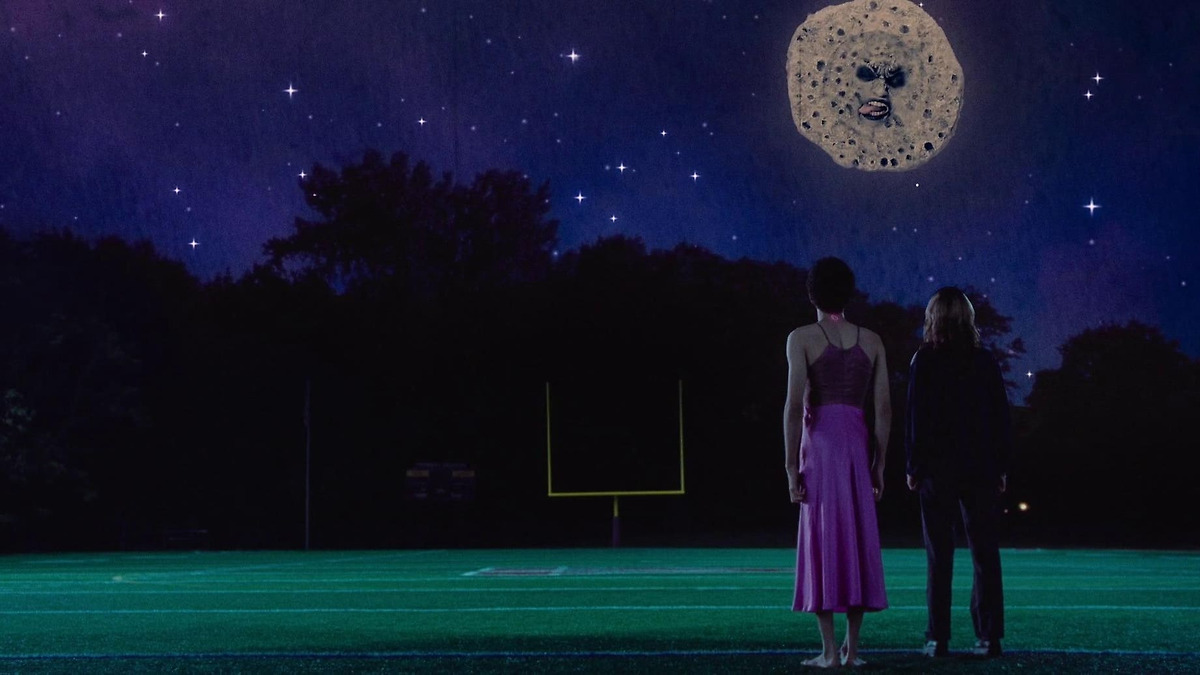
Media mingles with our lives as we consume it. We can’t help but adapt our media reception to our own life experiences, and the meaning we find in stories is often discovered in the margins of the intended reading. As the explosion of fan culture in the last several decades has revealed, media is often the first and best source of refuge for Weird Kids™, and there are grim undertones in the currently emerging nostalgia of those of us who were Weird Kids™ at the turn of the 21st century. At the beginning of our current age of intense isolation, surveillance, and the commodification of all experiences, there was still a lot of love to be found and shared through the TV. I Saw the TV Glow recreates the semi-analog world of the early 2000s with a reverent and intense fixation on the distinctive film textures and styles of the chintzy, “lowbrow” youth programming of the day. But better than that, it recreates the feeling of having experienced it firsthand, an understanding that consuming media isn’t just a matter of what’s on the screen, but the specific physical and emotional conditions you view them in; the nights sleeping over at a friend’s house letting the TV run into the weird late-hour programming of 2000s cable while you try to fall asleep, the shows blending with your dreams. This is an intimate and ultimately happy childhood memory for me, though there’s a bleary and slightly sinister quality to it that I know must not be unique to me given how precisely writer/director Jane Schoenbrun recreates it here.
It didn’t even begin to dawn on me that I Saw the TV Glow was a trans allegory until I Googled it later. In retrospect it couldn’t be more obvious, but like any good allegory its emotional journey is applicable to any human experience (transness being, obviously, an intensely human experience). Though there might be nothing more empowering than being yourself, actually becoming yourself is, for reasons both natural and unjust, a horrific, dangerous, and humiliating process, so much so that the choice to let the person we could have been wither and die can come to seem like the more reasonable option. As a moral this borders on cliché, but clichés exist for a reason, and nothing satisfies me more than to see one properly earned. I Saw the TV Glow sells its lesson with all the heartbreak a millennial period piece deserves.
1. Flow
Once upon a time, every Pixar movie came with a short attached to the front of it. The Pixar Shorts functioned as opening acts to the movie that followed, a sort of transitional beat between buying popcorn and the main attraction, but they were also animation showcases—tiny, unnecessary flourishes of talent and care that spun complete stories out of nothing but texture, movement, and sound effects. Everybody looked forward to them. They were evidence that Pixar was a studio full of creatively gifted people with the industrial support needed to make the most of their rich imaginations. The last time Pixar released a self-contained theatrical short was 2018.
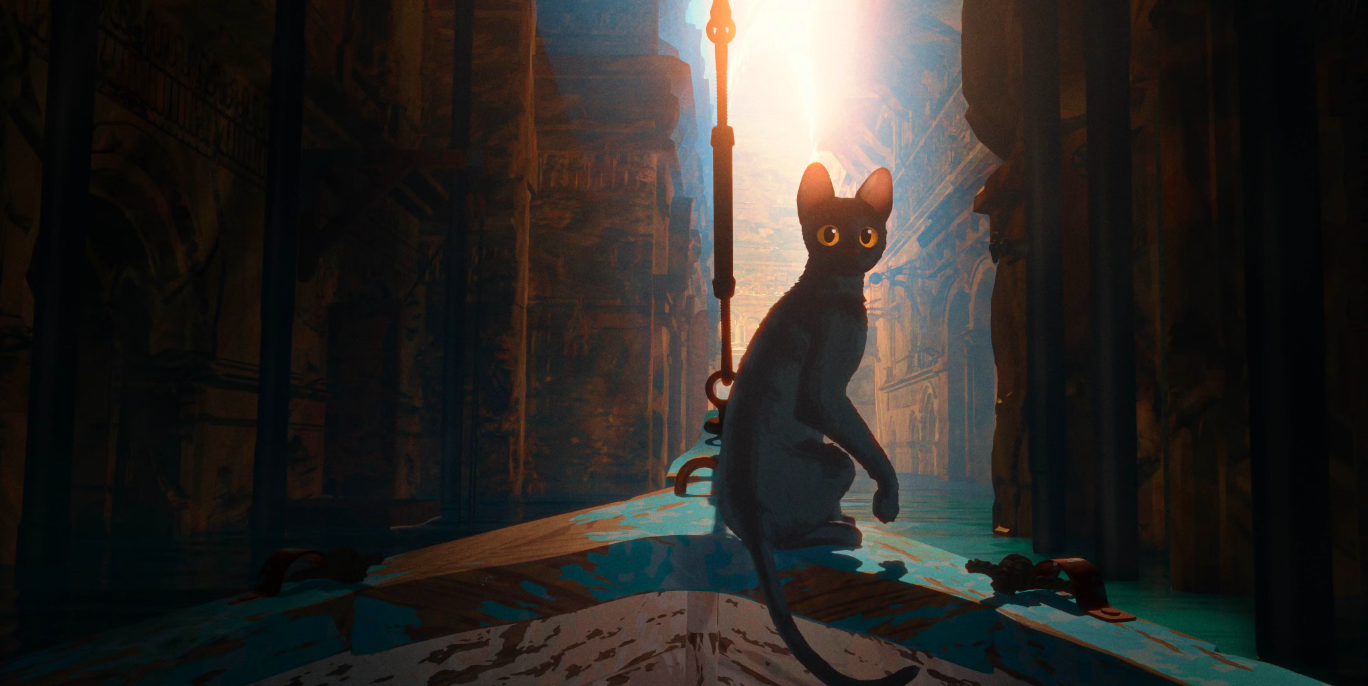
Like the Pixar Shorts, Flow has no dialogue at all. Unlike the Pixar Shorts, Flow demonstrates that there’s nothing a fancy studio brand can do that a bunch of committed filmmakers in Latvia with consumer-grade animation software can’t. The flooding, unstable world of Flow is impossible to place. Its animal cast is taken from all corners of the globe, and though human evidence is everywhere in abandoned cities and empty boats, the only brief human presence is an enormous and featureless statue whose reaching hand barely clears the water slowly subsuming it.
The animal protagonists barely glance at the statue as they drift by. Like all movies this is ultimately a human story, but humans, with all our miscommunications and preconceptions of each other so often obscuring the planetary forces that govern the fate of us all, would only get in the way. The desperate anxieties that consume so much modern human thought—about politics, about livelihood, about climate change—can’t help but progressively nudge us away from imagining possible, and even likely, versions of the future. Demonstrating how to imagine is what artists are for. The world Flow offers, a broken place where life remains as precious and chaotic as in any we would recognize, can only be rendered by people who have the kind of respect for both craftwork and subject matter we should expect from all artists. Here, one of the things that devotion requires is that the filmmakers let animals act like animals. It’s bonkers what a rarity that is in film today, one reason for which is likely the countless hours studying how a housecat moves and interacts with the world required to tell a story about it with emotion and empathy.
This kind of craftwork requires a freedom to play and experiment that is too often constricted in today’s mainstream film industry, not to mention society at large. It’s encouraging to see that unfavorable conditions alone can’t eradicate the bloom of creativity that’s so instinctive to humans. People will, however uncommonly, stubbornly continue to produce work that leaves you with a full heart and a calm mind, spiritually transported far away to a world where beauty, a quality as natural to existence as mortality, is free to arrange itself however it must. A place where no one asks, “but which celebrities are going to voice the animals?”