'Warfare' Review: A Campaign Against Meaning
Stop asking Alex Garland to show you human interpretations of events, that's not what art is for. I said stop it!
Note: This will probably be either my last or next-to-last Substack post. Apparently there’s a bit of a Nazi problem here. Even worse, Marc Andreessen has praised Substack for having the potential to be a precious fluffy lapdog of the future tech oligopoly. Andreessen likes this place, so I no longer do. A bear shits in the woods. I’ll be switching to Ghost, which I hear is an easy place to transfer to. My understanding is that you can port all your subs there, so if you want to keep reading articles by me you shouldn’t have to do anything, but I’ll make an announcement when the change is made anyway.
***
Last year I made a video called “Let Me Shoot You: Journalism and The Passive Aggression of Civil War.” In that video I argue that writer-director Alex Garland’s desire to celebrate conflict journalism relies on painfully outdated assumptions about the power of photography residing in some ontological “truth” the image carries compared with words. Like an optimistic version of the South American tribespeople who believe being photographed robs one’s soul in some unknowable way, Alex Garland appears to think that a well-taken photo literally holds the essence of reality within it; that it sequesters an otherwise fuzzy authenticity about the world, from which the past can then be forever referred to as reliably as if you had a time machine. If you can’t trust a photo, what can you trust?
I think it’s reasonable, even admirable, for an artist to engage in this kind of magical thinking. Artists should take their work seriously enough for it to be a spiritual act. The unproductive irrationalism that comes from this kind of starry-eyed artistic delusion is typically mitigated by expert knowledge of what is and isn’t possible within one’s medium. But if you obsess over a medium without taking any interest in or exposing yourself to its actual process and possibilities, you’re doing something else: you’re fetishizing. This is how Alex Garland, who is decidedly not a journalistic photographer but clearly enjoys playacting as one, gets a movie like Warfare made.
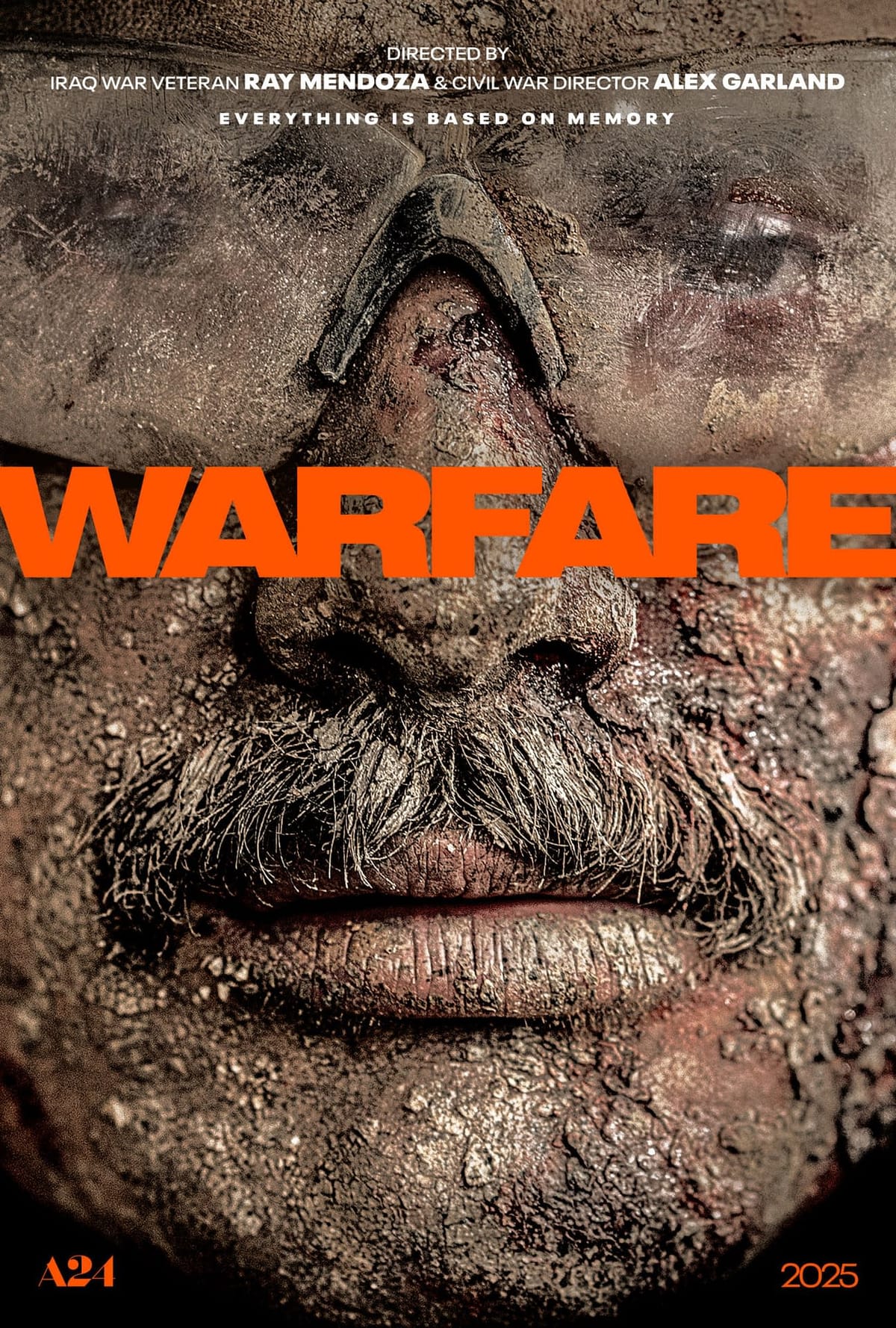
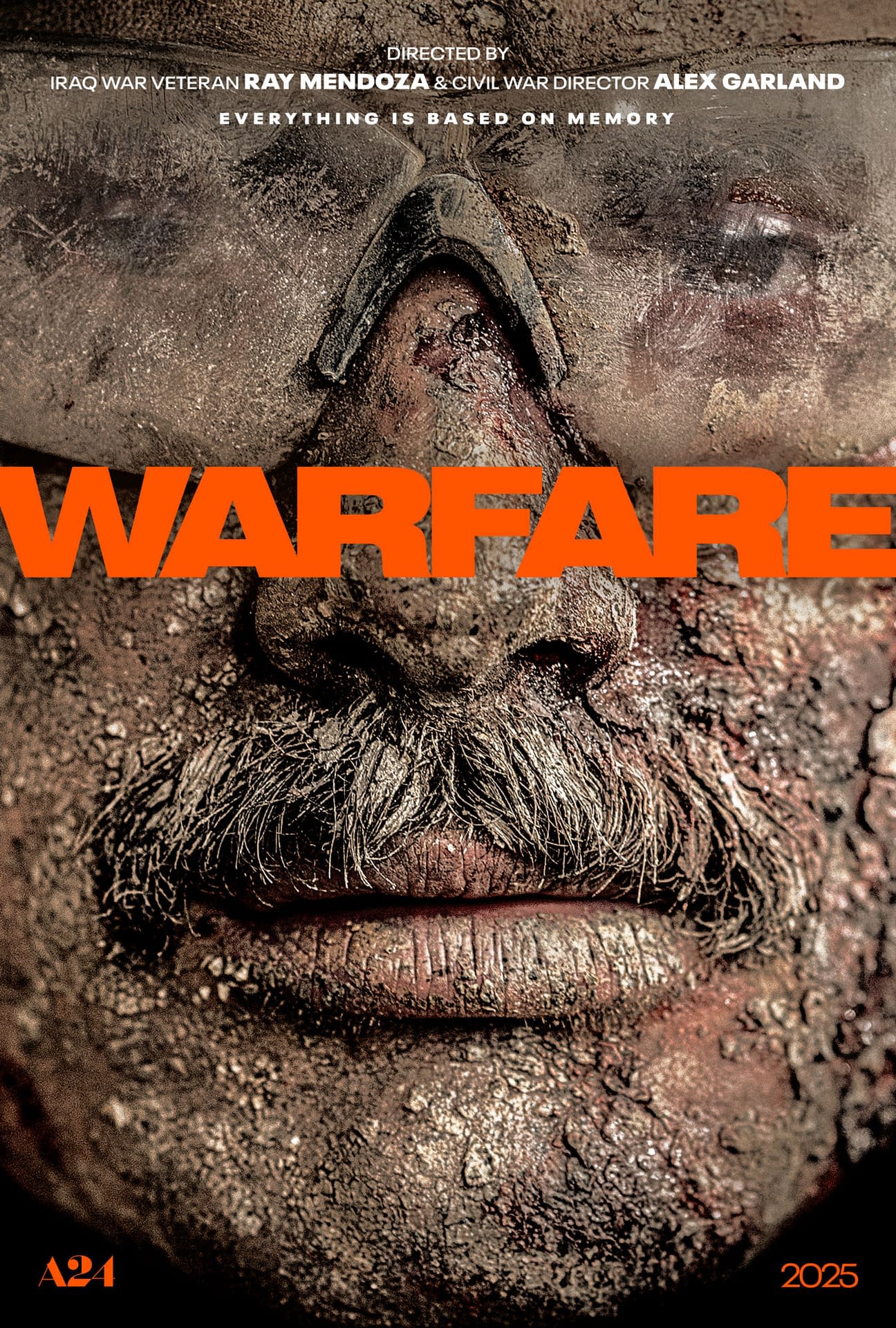
During the press circuit last year for Civil War, Alex Garland announced he’d be stepping away from directing to focus more on screenwriting, but that he’d first be co-directing an Iraq War movie based on the experiences of his Civil War military consultant, Ray Mendoza, who would take main creative responsibility. The resulting movie bases a large part of its marketability on “total fidelity” to Ray’s firsthand experience, capturing the disastrous 90 minutes in Ramadi that earned him a Silver Star and maimed several of his squadmates.
You can probably tell from my tone that I didn’t like this movie very much, so I feel like it’s important to say that I really do appreciate the broad emotional strokes behind Warfare. What’s onscreen is perhaps the most important day in Ray Mendoza’s life, and that shouldn’t be diminished. The event portrayed in this movie is nightmarish. Mendoza watched his friends suffer and a man die, and overall was exposed to more trauma in one afternoon than I’m likely to experience in a lifetime.
This, the raw fact of the trauma Ray Mendoza was subject to and the events that immediately led up to them, are all on display in Warfare—all the trauma, and absolutely nothing else. According to Garland, this is very much on purpose, part of his pursuit of an apolitical treatment of the Iraq War and this event’s place in it: “That neutral approach, I hope, means people can receive this as adults in their own way with whatever they bring, whatever their opinions are on the Iraq war — it doesn’t matter. This is extra information that they can interpret and take from what they will.”
As this mission statement implies, Warfare’s marketing identity hinges upon being a piece of counterculture mythbusting—abandoning the typical impulse of Hollywood to fit war into the same genre box that includes westerns and superhero movies. Here, finally, is a movie that cleaves as closely as possible to the experiences of the guys who have actually gone and done this stuff.
I’m not saying this is a cynical or wholly unsuccessful approach. The few combat veterans I know, who are so often alienated by the film industry’s sanitized categorization of war as a Western or Superhero genre variant, have nothing but good things to say about Warfare’s depiction of combat logistics and injuries. My impression is that this a rare movie that has made them feel seen, the reality of their experiences respected. I’m told it brings back the feeling of being there, spurs reflection on the meaning of this time in their lives and its fear, camaraderie, triumph, trauma, helplessness. Where Garland and Mendoza fall short is in their assumption that this realism is all war movies are missing—that images contain the essence of reality itself.
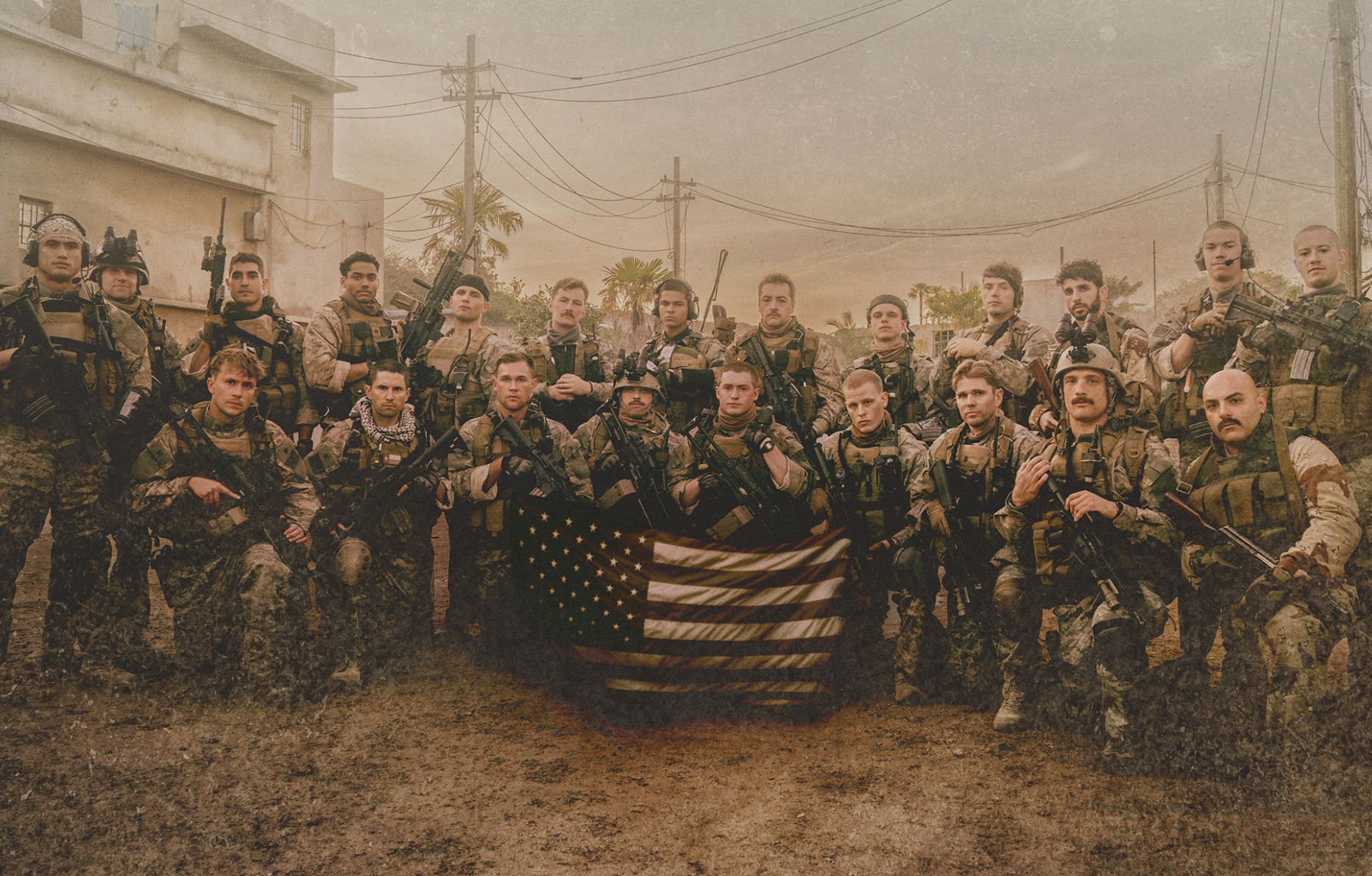
It's an illustration the fundamentally political nature of war that in removing as much of a human perspective or opinion about men being blown to literal pieces as possible, Warfare hardly leaves anything to engage with at all. This movie, just short of an hour and a half, feels like it’s about 15 minutes long.
It’s tempting to excuse this feeling of temporal collapse as a creative decision, and it may be, but the fact is that while I can intellectually muster plenty of empathy toward guys like Ray Mendoza and the things they’ve lived through, they are strangers to me, and Warfare does absolutely nothing to change that. These men are well-acted, but basically interchangeable with each other, with very little to indicate their relationships with one another, their personalities, their histories, what they think about finding themselves in foreign desert with an unclear mission surrounded by people who, with good reason, hate them. The few times this kind of thing is acknowledged—Ray’s frustration at a misguided soldier gamely shouting “get the fuck up, that’s barely a papercut” in the face of his friend, whose foot is a mess of blood and bone that will clearly never be recognizable again, one guy tripping and being met with a relieved smile by his squadmate, “I thought you were hit!”— I cling to them, desperate for these scraps of characterization that give these people the personal distinction their uniforms are built to deny them. It’s like the movie considers these moments frivolities, if not threats to the wise objectivity of the camera Garland is trying to sustain, making his statement that Warfare in any way offers “extra information” about anything glaringly untrue to the point of gaslighting.
In another interview, Garland spoke to the universal human quality he was trying to capture here, a commonality that, despite its supposed importance to him as a subject worth the immense logistical and financial effort to make a movie about, he refuses to name or describe: “What you are seeing is a group of young men and some civilians under an extraordinary amount of pressure. You would have found some of these things playing out two and a half thousand years ago with some Greek soldiers, and I think you find them playing out now in Gaza or Ukraine.”
Huh? What “things?” Young men losing limbs and lives and having the very meaning of their existence manipulated by political machinations out of their control? Is anyone but literal children under any illusion that this isn’t what happens in war?
The disturbing truth about the American psyche that Garland’s pompousness serves to occlude is that American civilians fail to hold their leaders accountable for sending people into aimless wars not because we don’t know people sometimes get their legs turned to hamburger meat over there, but because at the end of the day modern American culture doesn’t give us the tools to care. This has never been more true than during the Iraq War, when public opinion was squeezed as much as possible to fit a single shape drawn by the neoconservative demand that civilians understand these kinds of physical and psychological maimings as “sacrifices.” Something given by rather than taken from these men, a blood offering to the American empire that the nation ought to be grateful for, rather than infuriated and disgusted by. “Thank you for your service.” “Fighting for our freedoms.” This mind game is fundamentally not the same as the meaning of violence in, say, World War II, let alone Ukraine, or Gaza.
It's the job of stories to push past the cultural euphemisms that result in this ambivalence and make us care, to show us the perspective we’re missing when we’re told cold facts about the events of someone else’s life. You’re never going to get me to feel like I was actually in Ramadi just by showing me events as they “really were,” because watching something is not the same as experiencing it and never will be, no matter how many cliches you remove or soundscapes you painstakingly recreate. If you fixate on the physical realism of your experience to the exclusion of everything else, you’re not communicating anything about war to an audience, you’re doing a group therapy project. I don’t mean this as an insult—group therapy projects are worthwhile, and I hope Ray Mendoza and his friends got something good out of this venture. But it does very little to make me understand what he went through, because the ripple of trauma through human consciousness isn’t just about the physical consequences, it’s who you were before this event and how the event changed you, it’s your understanding of your presence in the world and how your trauma disrupts that understanding. The inability for humans to comprehend an experience simply through knowing its physical details is the very problem art was invented to address. Subjectivity is not a weakness of storytelling, it’s the entire goddamn point.
Opposed as it is to even the suggestion that human life might be more complex than can be expressed by programming code, I have to think the tech fetishism that has metastasized into the executive class of the film industry is responsible for the narrative Garland is using to sell this movie to investors and audiences. The line we’ve been fed about soldiers always experiencing a forthright hero’s journey is a lie, it’s not reality and everyone knows it. But instead of treating this as an intentional deception by American political interests, Garland presents this myth as a problem of human nature easily rectified by the right aesthetic formula. We live in computertimes, so all emotional affect must therefore be dishonest, and all dispassion therefore true. The whole thing is elevated to surrealism at times, with actor Cosmo Jarvis referring to himself and his co-stars in interviews not as artists, but as “technicians.”
Given the air of intrepid creative minds bravely shunning the stifling oppression of Hollywood standards around the marketing of Warfare, it’s actually startling how little seeing these events play out onscreen does to alter my opinions about anything—be it Mendoza or his friends (favorable, very sorry this happened to them and impressed by their courage), America’s conflict in Iraq (disfavorable, we were the bad guys and caused immeasurable suffering to both Iraqis and our own soldiers), or the nature of war itself (who knows, war is a black hole that pulls all meaning into its orbit and crushes it into subatomic dust).
In that way I suppose this is a worthwhile experiment, if we’re being real “technicians” about it and accepting that failures are just as important as successes. If a movie that approaches war like a schematic, carefully slicing out anything that might hint at subjectivity to produce the “highest fidelity” result doesn’t make people understand war, then what will? Maybe to maximize the realism we shouldn’t hire actors at all and should instead have real soldiers to play themselves, like Act of Valor did in 2012. Everyone loved watching Navy Seals stiffly deliver a line with the same emotional vacancy they’d deliver a bullet, as I recall. Or maybe we should attach bodycams to soldiers when we send them to war and simply screen their hundreds of hours of uncut footage trudging through endless expanses of desert and staring through rifle scopes. Maybe we should all just go to war ourselves, so we really get the undiluted experience.
The hope expressed in the many good reviews of this movie is clearly that even if Warfare isn’t perfect it’s a sign of good things to come, the film industry experimenting with more veracity than mythmaking, which means maybe someday soon we’ll get war movies that don’t shy away from the physical and psychological trauma soldiers go through at the same time as they offer some potential insight into the place war has in the human experience. I think this is unlikely. I think the film industry, defined as it is today by bloodless risk-avoidant investment analyses, will look at the overwhelmingly positive reviews of Warfare and think “ahh, excellent, looks like we actually don’t have to bother telling stories at all.”
That sucks. It should go without saying (but apparently doesn’t) that this outcome would be counterproductive to the goal of making audiences understand the particular kind of darkness war is—the destruction it demands in exchange for any positive outcome, and the moral questions evaluating these costs must inspire in all of us if clear-eyed respect for the reality of war is really what we’re after.
As it is, I get an eerie feeling of desperation from Warfare that I don’t think is intended, a haze of sadness emanating from this movie that reads to me as coming from being artistically gagged—albeit by a different ideology— rather than freed. As the text that opens the movie says: “this film is recalled from their memories.” Not from their records, not from some magical fountain of truth-concentrate, but from their memories. Memories are inescapably emotional and subjective accounts of history. That’s why they make such good material for film adaptations and such bad evidence in criminal trials. Garland and Mendoza’s faith in raw imagery to convey the significance of this event in Mendoza’s life has the same kind of frenzied obsession you’d see in a troubled religious evangelist, not an impartial observer simply transcribing fact, subjectivity being itself a Fact of memory. Despite the richness of memory as a source to draw from, Warfare aggressively insists that the thing you really must pay attention to is not the people who own these memories, but the physical substance of the memories themselves— that ending the violence our society soaks itself in is just a matter of telling the same story with more detail and less pesky human opinion, that our scrutiny just needs to be more clinical, that getting the dust in the air just how they saw it and capturing the exact evil glint of the desert sun baking recently exposed internal organs will force the audience to understand what something like this feels like to live through. “Look harder, look, look at what I saw. This is exactly my memory, look harder. Look at my friend when his foot was shredded by explosives and he was delirious with pain. Here’s what he looked like, look. Look harder. Maybe then you’ll finally get it.”
5/10.